

Category: Skoodos

Choosing a school is one of the most important decisions parents make. Fees, infrastructure, and school reputation often get a lot of attention during the selection process. Yet one factor has a far greater impact on a child’s learning experience: teacher engagement in schools.
A beautifully designed campus cannot replace a classroom where teachers actively connect with students. Real learning happens when teachers interact with students, ask questions, encourage discussion, and respond to curiosity. For parents visiting a school for the first time, recognizing these signals can make a huge difference in evaluating the institution.
Many parents admit that during campus visits, they focus mostly on facilities—smart classrooms, playgrounds, or labs—while overlooking the quality of teacher-student interaction in the classroom. But observing how teachers engage with students can reveal more about the school’s academic culture than brochures or admission presentations.
Platforms like Skoodos have also made this process easier by helping parents compare schools based on real insights about teaching quality, classroom practices, and overall learning environments. When you combine online research with a careful school visit, you gain a clearer understanding of how teachers actually support student learning.
This guide explains how to identify teacher engagement during a school visit, what signals indicate strong teaching practices, and how parents can evaluate classroom quality before finalizing admission.
Research consistently shows that teacher involvement in student learning directly affects academic performance, motivation, and confidence.
Engaged teachers do more than deliver lessons. They create an environment where students participate, ask questions, collaborate, and think critically.
In Indian schools—especially within CBSE and ICSE systems—curriculum expectations are demanding. Students benefit most when teachers move beyond textbook teaching and use interactive teaching strategies that help concepts come alive.
When you walk into a classroom, it usually takes only a few minutes to understand whether the environment supports learning.
Instead of focusing only on presentation screens or teaching aids, watch how the teacher interacts with students. The quality of teacher-student interaction often reveals the true learning culture.
Here are some practical signals parents can observe.
One of the strongest signs of teacher engagement in schools is consistent interaction between teachers and students.
In an engaged classroom, teaching rarely looks like a one-way lecture. Instead, teachers involve students through questions, discussions, and collaborative activities.
For example, in a well-run CBSE classroom, a science teacher might ask students to explain why a chemical reaction occurs instead of simply dictating the answer.
This approach strengthens teacher communication with students and encourages deeper understanding.
Another strong indicator of classroom teaching engagement is how many students participate during the lesson.
If only a few students respond while the rest remain silent, the teaching method may not be encouraging broad participation.
This type of collaborative classroom learning ensures that every child has an opportunity to contribute.
When parents explore school options using platforms such as Skoodos, they often discover schools known for promoting student participation in lessons rather than passive learning.
A key element of effective teaching practices in schools is how teachers respond when students struggle or ask questions.
During a classroom visit, pay attention to whether teachers:
When teachers show patience and attentiveness, it builds supportive teacher-student relationships.
Students who feel comfortable asking questions are more likely to develop curiosity and confidence in their learning.
Many schools claim to follow student-centred teaching methods, but the real test is classroom practice.
Student-centred teaching focuses on helping learners actively construct knowledge instead of memorizing information.
For instance, a history teacher may ask students to analyze a historical event from different perspectives rather than simply memorizing dates.
This approach strengthens interactive teaching strategies and supports deeper learning outcomes.
A well-managed classroom is usually a sign of high teacher engagement.
This does not mean strict discipline or silence. Instead, it reflects an environment where students remain focused and productive.
These elements contribute to the overall quality of the school classroom environment.
Parents researching schools through Skoodos often prioritize institutions where classroom discipline and engagement coexist in a balanced way.
Modern classrooms increasingly use interactive teaching strategies to improve learning outcomes.
These strategies help students understand concepts instead of memorizing them.
However, technology alone does not guarantee engagement. What matters is how teachers use these tools to facilitate active learning classroom environments.
A teacher who simply reads slides may not create meaningful learning experiences.
Engaged teaching is not only about academic instruction; it also involves emotional connection.
Teachers who build relationships with students often achieve stronger learning outcomes.
These interactions help build trust, which is essential for long-term academic development.
Parents evaluating school classroom quality in India often underestimate how important this emotional environment is for student growth.
Here is a simple checklist parents can use during a classroom visit.
Things to check about teachers when visiting a school
✔ Are students actively participating?
✔ Does the teacher ask open-ended questions?
✔ Are students comfortable asking doubts?
✔ Does the teacher move around the classroom?
✔ Is the classroom atmosphere positive and respectful?
✔ Do students appear interested in the lesson?
This checklist can help parents evaluate teaching quality in schools before admission.
Many parents now combine such observations with research from education discovery platforms like Skoodos, which provide insights into teaching practices, school culture, and classroom environments across different institutions.
While infrastructure and extracurricular facilities are important, teaching quality remains the most important factor in student success.
Parents can compare schools based on several teaching indicators:
Education platforms such as Skoodos simplify this comparison process by helping families explore the best schools with strong teaching quality, review admission information, and even book school campus visits for parents.
This combination of research and in-person observation allows parents to make more informed decisions.
Strong teacher engagement in schools leads to measurable improvements in student success.
When teachers actively involve students in lessons, education becomes a collaborative experience rather than a passive one.
This is why evaluating teaching quality in Indian private schools is becoming a key priority for parents.
Choosing the right school requires more than reviewing brochures or ranking lists. Observing teacher engagement in schools during your first campus visit can reveal the true quality of learning happening inside classrooms.
By focusing on teacher-student interaction quality, classroom participation, teaching methods, and emotional connections, parents gain valuable insight into how well a school supports student growth.
A short classroom observation can often answer questions that marketing materials cannot.
Tools like Skoodos further support this process by helping parents research schools, compare teaching quality, and identify institutions that prioritize strong classroom engagement.
Ultimately, the goal is simple: find a school where teachers actively support learning, encourage curiosity, and create an environment where students feel motivated to grow.
An effective teacher encourages participation, answers student questions patiently, and adapts teaching methods to ensure students understand concepts rather than memorize them.
Parents should observe classroom participation, teacher-student interaction, classroom discipline, teaching methods, and how comfortable students appear when asking questions.
Teaching quality can be evaluated by observing classroom engagement, reviewing academic outcomes, checking teacher qualifications, and speaking with school administrators.
An engaging teacher uses discussions, questions, activities, and real-life examples to involve students actively in the learning process.
Teacher engagement improves student motivation, academic performance, and overall confidence in learning.
Schools often measure teacher effectiveness through student outcomes, classroom observations, feedback from students and parents, and professional development assessments.





 Blog: Recently Added
Let me say this the way most parents feel it—but don’t always say out loud.mSchool visits are confus...

Let’s be real for a second. Most of us don’t start school admissions with a spreadsheet. We start wi...

If you’re looking for a school right now, you probably didn’t expect it to feel this complicated. At...

If you’ve started looking at school admissions recently, you’ve probably come across terms like ...

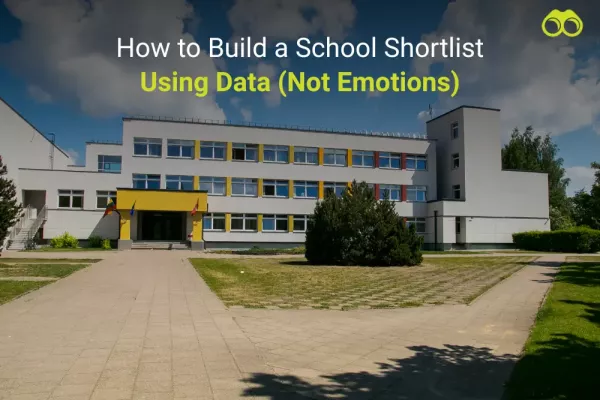
If you’ve ever tried shortlisting schools the traditional way, you already know how messy it gets.On...

If you’ve been through the school admission process recently, you’ve probably noticed something that...
If you’ve reached the school interview stage, you’ve probably already done a lot,forms, research, vi...

Choosing a school is one of those decisions that doesn’t feel urgent,until it suddenly is. Forms ope...
Choosing a school is one of the most important decisions parents make. Fees, infrastructure, and sch...

Choosing the right school is one of the most important decisions parents make for their children. Ac...


 +91 8766 790 362