

Category: Skoodos

Choosing the right school is one of the most important decisions parents make for their children. Academic performance, infrastructure, co-curricular opportunities, and safety all matter. Yet when families begin researching options, they are often confronted with a familiar question: Should they trust school rankings or listen to what other parents say?
Many schools highlight rankings in advertisements, brochures, and websites. Rankings look impressive and are easy to promote. But they rarely tell the full story of what everyday life at the school actually feels like.
This is where parent testimonials for schools become valuable. Real experiences from parents reveal details that rankings simply cannot capture, such as how teachers interact with students, how responsive the administration is, and whether children genuinely enjoy learning there.
Platforms such as Skoodos have made it easier for families to explore authentic parent experiences in schools before making admission decisions. By combining school information with real feedback from parents, these platforms help families build trust in the school selection process rather than relying solely on advertised numbers.
In this guide, we will explore why parent testimonials matter more than school rankings, how they influence admission decisions, and how parents can use reviews and feedback to choose the right school.
School rankings are often used as a quick indicator of academic performance. They usually rely on factors such as:
These metrics are helpful, but they only provide a partial picture of a school’s quality.
Outdated data
Rankings often rely on information that may be a year or two old.
Because of these limitations, many parents now ask an important question:
Are school rankings reliable enough to guide admission decisions?
The answer is: not always on their own.
When parents talk about their experiences with a school, they provide something rankings cannot: context and lived experience.
Parent testimonials for schools reveal how policies, teaching styles, and school culture affect real families.
For example, two schools may both rank highly academically. But parents might report that one school has better communication, more supportive teachers, and a healthier learning environment.
That kind of insight is invaluable during education decision-making for parents.
To understand the difference more clearly, consider the comparison below.
Both sources of information are useful, but school rankings vs parent feedback serve different purposes.
Rankings help parents discover options, while testimonials help them decide confidently.
Parents today conduct extensive research before choosing a school. Search trends show increasing interest in questions like:
One of the strongest factors influencing decisions is real parent opinions about schools.
1. Building Trust
Parents trust other parents more than advertisements. Authentic school reviews reduce uncertainty during the admission process.
2. Understanding Day-to-Day School Life
Reviews reveal everyday realities such as homework expectations, classroom culture, and teacher accessibility.
3. Evaluating Parent Satisfaction
High levels of parent satisfaction in schools often indicate strong communication and student support.
4. Identifying Potential Concerns
Reviews sometimes highlight issues that official brochures may not mention, such as administrative delays or inconsistent policies.
Platforms that aggregate school experience feedback make this research easier. Many parents today use tools like Skoodos to compare schools based on real testimonials before finalizing applications.
Parent testimonials often highlight aspects of a school that cannot be measured through academic scores.
Parents frequently comment on how teachers interact with students.
Examples include:
These factors directly influence student success analytics, even if they do not appear in rankings.
Effective schools maintain strong communication channels.
Parents often evaluate:
These factors contribute to school trust and credibility.
Parents often mention how happy their children feel at school.
Indicators include:
These insights are rarely captured in rankings but are crucial in school admission research by parents.
In India, school admissions can be competitive and complex. Cities such as Delhi, Mumbai, Bangalore, and Hyderabad have hundreds of schools offering different boards, CBSE, ICSE, IB, and Cambridge.
Parents increasingly rely on school parent reviews in India to navigate these choices.
Parents searching for the best schools in India often look for testimonials from families whose children already study there.
Similarly, localized searches such as:
have become common in online school research.
Platforms like Skoodos help parents explore school listings, compare options, and read real parent testimonials before beginning the admission process.
Not all reviews carry the same value. Parents should learn how to evaluate feedback carefully.
When reviewing authentic school reviews, consider the following:
✔ Consistency across reviews
Do multiple parents mention similar strengths or concerns?
✔ Specific experiences
Detailed feedback is often more reliable than vague praise.
✔ Recent reviews
Schools evolve quickly, so recent testimonials matter more.
✔ Balanced feedback
A mix of positives and constructive criticism usually indicates authenticity.
✔ Context of the reviewer
Consider the grade level, board, or experience being described.
These factors help parents identify real parent experiences vs advertised school rankings.
Parent testimonials do not only help families. They also benefit schools in several ways.
Positive parent feedback contributes to a school’s credibility and trust.
When schools encourage feedback, they demonstrate openness and accountability.
Parent reviews highlight areas where schools can improve.
Testimonials build a sense of partnership between schools and families.
Many schools now actively monitor school reputation through parent reviews to understand community expectations.
Parents researching admissions often ask:
Where can I find reliable parent feedback about schools?
Several types of platforms provide this information.
For example, platforms like Skoodos allow parents to compare schools based on parent testimonials, explore admission details, and read authentic feedback from families.
This combination of data and real experiences makes school research more informed.
Rather than relying on a single source of information, parents should combine multiple insights.
Step 1: Shortlist schools using rankings and location
Rankings help identify academically strong institutions.
Step 2: Compare infrastructure and curriculum
Evaluate boards, facilities, and extracurricular offerings.
Step 3: Read parent testimonials
Look for consistent patterns in feedback.
Step 4: Visit the school
Observe classroom culture and interact with staff.
Step 5: Check admission timelines
Understand deadlines, documentation, and fee structures.
Using digital school research platforms such as Skoodos can simplify this process by bringing school listings, reviews, and admission details into one place.
To summarize, rankings and testimonials serve different purposes.
Rankings provide statistical evaluation, while testimonials provide human experience.
When parents combine both sources, they gain a much clearer understanding of a school.
But in many cases, parent testimonials for schools carry more practical value, because they answer the questions families care about most:
These answers rarely appear in rankings but frequently appear in parent feedback.
School rankings can be helpful for identifying academically strong institutions, but they should not be the only factor in choosing a school. Rankings often focus on limited metrics and may not reflect everyday student experiences.
Parent reviews provide real insights into teaching quality, communication, student wellbeing, and administrative transparency. They help other families understand what the school experience actually feels like.
Most parents combine multiple factors, including curriculum, infrastructure, location, fees, extracurricular opportunities, and parent testimonials for schools before making a decision.
Rankings are useful for initial research, but they should be supplemented with parent feedback, school visits, and direct conversations with educators.
Parents should evaluate:
Authentic parent experiences in schools
Choosing a school is about more than exam scores or published rankings. It is about finding an environment where children feel supported, curious, and motivated to learn.
While rankings offer a snapshot of academic performance, parent testimonials for schools reveal the everyday reality of school life. They show how teachers interact with students, how responsive the administration is, and whether children truly thrive there.
For parents navigating complex admission decisions, these insights are invaluable.
If you are researching schools, take the time to explore authentic parent experiences alongside rankings. Platforms like Skoodos make this easier by bringing school information, reviews, and comparisons into one place, helping families make more confident and informed decisions.
Start by comparing schools based on real parent testimonials and find the environment where your child will thrive.





 Blog: Recently Added
Let me say this the way most parents feel it—but don’t always say out loud.mSchool visits are confus...

Let’s be real for a second. Most of us don’t start school admissions with a spreadsheet. We start wi...

If you’re looking for a school right now, you probably didn’t expect it to feel this complicated. At...

If you’ve started looking at school admissions recently, you’ve probably come across terms like ...
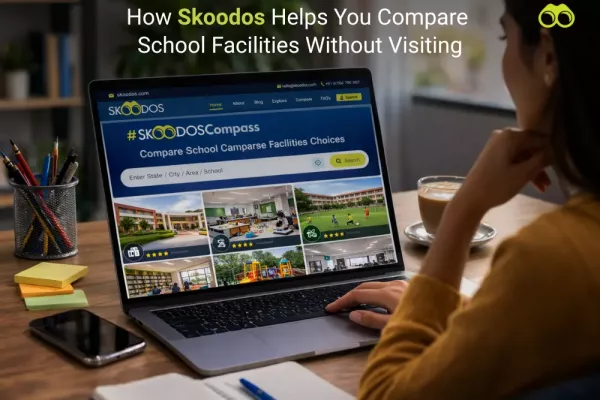
If you’ve ever tried shortlisting schools the traditional way, you already know how messy it gets.On...

If you’ve been through the school admission process recently, you’ve probably noticed something that...
If you’ve reached the school interview stage, you’ve probably already done a lot,forms, research, vi...

Choosing a school is one of those decisions that doesn’t feel urgent,until it suddenly is. Forms ope...

Choosing a school is one of the most important decisions parents make. Fees, infrastructure, and sch...
Choosing the right school is one of the most important decisions parents make for their children. Ac...


 +91 8766 790 362