

Category: Skoodos
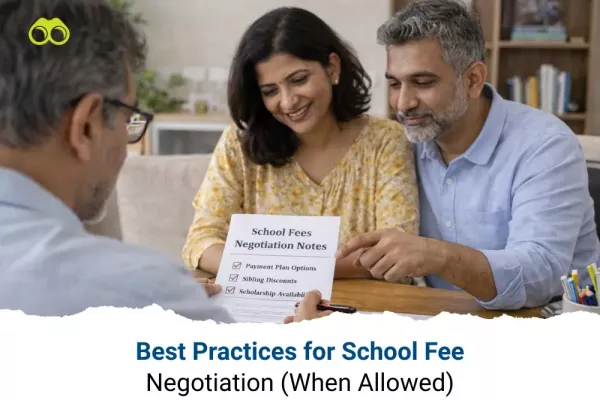
For many parents, the difficult part of school admission does not end when the child gets selected. Sometimes it begins when the fee sheet arrives. You look at tuition first. Then transport. Then books. Then uniforms. Then the annual charges. Then activity fees. By the end of it, the total is very different from the number you first had in mind. That moment is familiar in many households. The next question usually comes quietly: Can we discuss this with the school? Sometimes yes. Sometimes no.
Not every school allows fee changes, and not every charge can be adjusted. But some schools do consider instalment plans, sibling discounts, scholarships, hardship requests, or limited concessions. That is where sensible school fee negotiation tips can actually help. It is less about bargaining and more about knowing how to ask. If parents compare schools early through platforms like Skoodos, they also get a clearer picture of fee ranges before reaching the stressful stage.
This guide explains how to negotiate school fees, when it is worth asking, what schools may consider, and what parents should avoid.
This part matters most. Some parents assume every fee is open for discussion. Usually, that is not true. Many schools work with approved fee structures. Tuition fees may be fixed for the academic year. Certain charges may already be decided by management or regulation. But some areas may have flexibility, depending on policy:
So when people ask are school fees negotiable in India, the honest answer is: sometimes, but not always. It depends on the school, the city, and the type of fee.
This one shift can change the whole conversation. Walking in with “I want lower fees” often creates resistance. Walking in with “I’d like to understand if any support options are available” usually works better. Schools are more likely to respond to:
This is why many successful school fee reduction strategies begin with tone, not tactics.
There are situations where fee discussions are reasonable and common.
A job loss, salary cut, medical emergency, or business slowdown can affect even careful families.
Many schools have sibling discounts, though not all advertise them loudly.
If a child joins late, some charges may be handled differently.
Academic, sports, or talent-based concessions may exist.
Some parents can afford the total amount but need monthly or quarterly flexibility. That is where school payment flexibility options become more useful than a fee cut.
Let’s be realistic. There are times when a request is unlikely to go far.
Schools tend to help more when parents approach early and respectfully.
Many families focus only on tuition and miss the rest. Always ask for a detailed breakup.
This is basic understanding of school fee structures, and it can save mistakes. Sometimes tuition is fixed, but transport is optional. Sometimes annual charges can be split. Sometimes activity fees vary. The answer may be hiding in the details.
Not during dispersal time. Not outside the gate. Request time with:
A simple sentence works better than a dramatic story. Try this: “We’re happy with the school and would like to continue. We’re facing temporary financial pressure. Could you please guide us if any concession or payment flexibility is available?” That tone matters.
Instead of saying “fees are too high,” ask:
Specific questions get useful answers.
If money is the issue, say so honestly. Schools hear many vague reasons. Clear communication feels more genuine. A short written request can help.
Dear Sir/Madam,
We value our child’s education at your school. Due to recent financial difficulties, we request consideration for any available concession or installment option. We would appreciate guidance on the process.
Thank you.
No long story needed. This kind of respectful approach improves parent school fee communication.
With private school fee negotiation, results vary from school to school.
Some may say:
Private schools are not all the same. Some are flexible. Some are very structured. Do not assume either.
Sometimes parents focus on negotiation when easier savings already exist.
These are practical education cost saving tips for parents.
A family in Delhi shortlisted a private school they genuinely liked. Tuition looked manageable. But once transport, uniforms, and annual charges were added, the number became difficult. Instead of asking for a tuition cut, they asked three things:
They got a payment split and transport flexibility. No dramatic negotiation. Just the right questions.
Fees vary widely across cities.
For example:
Always compare schools within the same city and category. Using Skoodos can help parents compare fee ranges, boards, facilities, and location before applying. That alone can reduce stress later.
If difficulty is coming, speak early.
Even justified frustration rarely helps.
It usually closes doors.
Some schools already mention concessions clearly.
This happens more often than people admit.
Before asking for a fee discussion, ask yourself:
If yes, proceed.
That happens often.
And it does not always mean the conversation failed.
Ask:
Sometimes “no concession” still leads to a workable solution.
Many fee problems start before admission. Parents fall in love with a school first, then look at numbers later. Using Skoodos, families can compare schools by fees, facilities, board, location, and other practical factors before they commit. That means fewer surprises and better planning. Whether you are applying this year or planning ahead, Skoodos helps parents choose with clearer information.
The best school fee negotiation tips are usually not about negotiating at all. They are about preparation. Know the numbers. Ask early. Stay respectful. Be specific. Look for options. Some schools will not reduce fees. Some may offer concessions. Others may simply help through payment flexibility. The real goal is not to “win” against the school. It is to make your child’s education manageable without unnecessary stress at home.
Sometimes that means a concession. Sometimes it means a better payment plan. Sometimes it means choosing a different school. If you are still comparing schools, start with Skoodos and make the decision with full information from the beginning.
Sometimes. Some private schools offer concessions, scholarships, or payment flexibility based on policy.
Request a formal meeting, explain your situation honestly, and ask if support options exist.
Some do, especially for siblings, merit, hardship cases, or advance payment.
Be respectful, clear, and realistic. Written requests often help.
Some are, some are not. It depends on school policy, regulation, and the type of fee.





 Blog: Recently Added
When parents talk about schools, the same things usually come up first. Marks. Fees. Board. Results....

For many working parents, school admission season begins with one sentence: “We should start looking...

Applying to schools should feel easier now than it did years ago. No long queues. No repeated campus...
For many parents, the difficult part of school admission does not end when the child gets selected....

The day you finally sit down after moving boxes still around, things not fully set, this question us...

If you ask most parents when they started preparing for school admissions, the honest answer is: whe...

There’s a very ordinary moment that keeps repeating during admission season. You’re doing something...

Let me say this the way most parents feel it—but don’t always say out loud.mSchool visits are confus...

Let’s be real for a second. Most of us don’t start school admissions with a spreadsheet. We start wi...

If you’re looking for a school right now, you probably didn’t expect it to feel this complicated. At...


 +91 8766 790 362