

Category: Skoodos
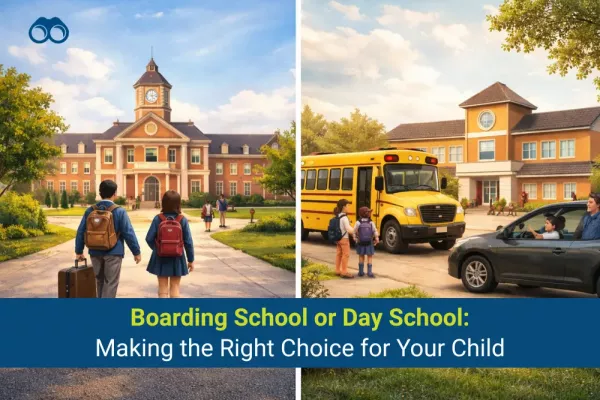
Every parent reaches a point where this question quietly starts coming up: Should we consider boarding school, or is a day school better for our child? It sounds like a simple comparison at first, but once you begin exploring options, the decision feels much more personal.
It isn’t only about academics or reputation. It’s about lifestyle, emotional comfort, independence, and the kind of environment in which your child will actually grow. Some children flourish when they are given space and structure away from home. Others need a daily family connection to feel secure and confident.
The truth is, there is no universal answer. What matters is finding the setting that fits your child, not just following trends or what other parents are choosing.
A few years ago, most families focused mainly on finding a good school nearby. Today, parents look at education very differently. Conversations are no longer limited to marks and board results. People talk about confidence, emotional well-being, discipline, exposure, and life skills.
At the same time, schools in India have evolved. Residential campuses now offer world-class facilities, structured extracurricular programs, and strong academic frameworks. Urban day schools, especially in cities like Delhi, Mumbai, Bengaluru, Pune, and Hyderabad, are also raising standards and creating balanced learning environments.
With so many strong education options available, parents naturally spend more time comparing school types and trying to understand what will actually benefit their child in the long run.
On paper, the difference is obvious. Boarding schools are residential; students live on campus. Day school students attend classes and return home every afternoon.
But the impact of that difference is bigger than most people expect. Boarding schools shape almost every part of a child’s daily routine, study time, friendships, sports, meals, and even downtime. The environment becomes a complete ecosystem.
Day schools, on the other hand, allow children to separate school life from home life. Learning happens during the day, while emotional grounding and family routines continue in the evenings.
Neither system is automatically better. They simply create different experiences, and understanding this helps parents move beyond stereotypes.
Many families consider boarding schools because they encourage independence earlier than day schools usually do. When children manage their own schedules, laundry, study time, and social situations, they often become more responsible over time.
Structure is another major advantage. Boarding schools typically follow a consistent daily schedule, which can help students who thrive with routine. There is less room for procrastination because study hours, activities, and rest periods are built into the day.
Another benefit parents mention is community. Living with peers creates strong friendships and teaches children how to coexist with different personalities. They learn patience, teamwork, and problem-solving in everyday situations rather than just in classrooms.
Some students also find academics easier to focus on without long commutes or household distractions. The environment naturally pushes them toward consistent study habits.
Boarding schools are not the perfect solution for every child, and it’s important to acknowledge that honestly.
The adjustment phase can be hard. Homesickness is common, especially during the first few months. Some children adapt quickly, while others take longer to feel comfortable away from family.
Parents also experience the shift. Daily moments, helping with homework, chatting during dinner, and small routines suddenly disappear, which can be emotionally challenging.
Cost is another practical factor. Boarding education usually includes accommodation, food, supervision, and activities, making it a larger financial commitment compared to day schools.
None of these points means boarding is a bad choice. They simply remind parents that emotional readiness matters as much as academic goals.
Day schools remain the preferred option for many Indian families, and the reasons are easy to understand. The biggest advantage is everyday family involvement. Children return home daily, which allows parents to stay closely connected to both academic progress and emotional well-being.
For younger students, especially, this consistency creates a sense of safety and stability. Parents can notice small changes in mood, confidence, or social behaviour and respond early.
Day schools also offer flexibility. Students can pursue hobbies, sports coaching, music, or other interests outside school hours. Families have more freedom to shape routines based on their child’s interests and energy levels.
Financially, day schools are often easier to manage as well, since costs usually cover academics without residential expenses.
There isn’t a strict rule, but many educators feel that younger children benefit from staying closer to home during their early years. Emotional development happens quickly at this stage, and daily interaction with family often provides reassurance and confidence.
As children grow older, some parents reconsider boarding options, especially if the child shows signs of independence or needs a more structured environment.
Still, age alone shouldn’t decide the matter. Some children are naturally adaptable and enjoy independence early, while others prefer family support for longer. Personality usually tells you more than age.
Parents often focus heavily on whether a school is boarding or day-based, but educators will tell you that success depends more on overall quality than format.
Things that genuinely influence outcomes include:
A strong day school can easily provide better results than a boarding school that doesn’t suit the child, and vice versa. The environment has to match the student.
Before making a decision, it helps to pause and think honestly about your child rather than comparing with others.
Sometimes, answering these questions makes the direction clearer than researching rankings for weeks.
When parents start shortlisting schools, they usually compare similar factors regardless of school type:
If possible, visiting campuses is extremely helpful. The way teachers interact with students, the general atmosphere, and even small details like student behaviour tell you more than brochures ever will.
One mistake many parents make is starting late. Admissions often begin months before the academic year starts.
A typical timeline looks like this:
Planning early reduces stress and gives you enough time to compare options calmly instead of rushing into a decision.
Boarding Schools
Day Schools
Choosing between a boarding school and a day school is rarely about finding the “best” option. It’s about understanding your child as an individual.
Some children grow rapidly when placed in structured, independent environments. Others need the daily support and familiarity of home to truly feel confident. Both paths can lead to strong academic and personal development when the fit is right.
Take your time. Visit schools, ask questions, and involve your child in the conversation when possible. The right decision usually feels less like a perfect answer and more like a comfortable one.
If you want to compare schools, fees, and admission details in a more organized way, platforms like Skoodos can help you explore options side by side and make the process simpler.
At the end of the day, the right school is not the one that looks best on paper; it’s the one where your child feels ready to learn, grow, and enjoy the journey.





 Blog: Recently Added
Let me say this the way most parents feel it—but don’t always say out loud.mSchool visits are confus...

Let’s be real for a second. Most of us don’t start school admissions with a spreadsheet. We start wi...

If you’re looking for a school right now, you probably didn’t expect it to feel this complicated. At...

If you’ve started looking at school admissions recently, you’ve probably come across terms like ...

If you’ve ever tried shortlisting schools the traditional way, you already know how messy it gets.On...

If you’ve been through the school admission process recently, you’ve probably noticed something that...
If you’ve reached the school interview stage, you’ve probably already done a lot,forms, research, vi...

Choosing a school is one of those decisions that doesn’t feel urgent,until it suddenly is. Forms ope...

Choosing a school is one of the most important decisions parents make. Fees, infrastructure, and sch...

Choosing the right school is one of the most important decisions parents make for their children. Ac...


 +91 8766 790 362