Category: Skoodos
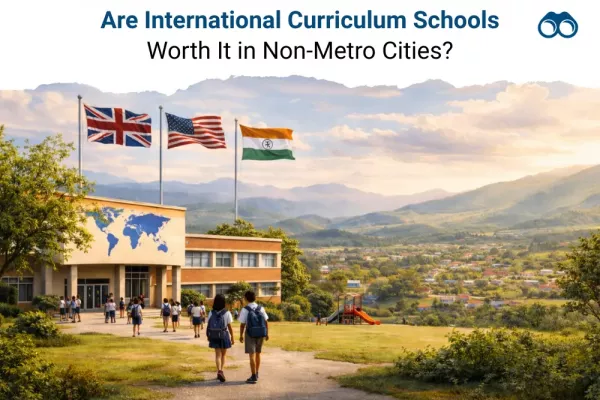
Every parent who is looking at schools today eventually asks this question: If we don’t live in a metro city, does choosing an international curriculum still make sense?
For families in cities like Jaipur, Indore, Kochi, Coimbatore, Surat, or similar tier two locations, the decision feels even bigger. International curriculum schools promise global exposure, modern teaching methods, and future readiness, but parents also wonder about affordability, recognition, and long-term value.
This guide is written for parents who want honest, practical clarity about international curriculum schools in non-metro cities so they can make a decision based on real understanding, not marketing language.
Before comparing schools, it helps to understand what the international curriculum really means.
Most international schools in India follow one of these:
The teaching methodology in the international curriculum usually focuses on:
This is why many parents compare CBSE vs international curriculum schools when planning for future education.
A few years ago, global curriculum schools were mainly found in Delhi, Mumbai, or Bengaluru. Today, many international schools outside metro cities are opening in tier two cities.
Reasons behind this shift:
Cities like Jaipur, Indore, Coimbatore, and Kochi now offer multiple IB and Cambridge options that were rare a decade ago.
The honest answer is: it depends on your child and your long-term plans.
Let’s look at both sides clearly.
1. Modern Learning Style
Students learn through discussion, projects, and application rather than only textbooks.
2. Global Mindset
Exposure to international ideas and assessment styles builds confidence.
3. Communication Skills
Presentation, writing, and analytical thinking are strongly encouraged.
4. Better Preparation for Global Universities
IB and Cambridge grading systems are widely accepted by international colleges.
5. Smaller Class Strengths (in many cases)
Some schools in non-metro cities offer more personal attention compared to overcrowded urban schools.
International Schooling Affordability in India
Fees are usually higher compared to CBSE schools.
Teacher Availability
Not all schools outside metros maintain the same faculty quality as established urban institutions.
Limited Peer Competition
In smaller cities, exposure levels may depend more on school initiatives.
Board Transition Issues
Moving between Indian boards and an international curriculum later can sometimes be challenging.
This is why parents often ask: Is international education useful outside metro cities? The value depends on how well the school actually delivers the curriculum.
Fee structures vary widely.
Community discussions also show parents often debating whether the higher cost feels justified by outcomes, facilities, or exposure.
Simple truth: International school fees and ROI should be judged by teaching quality, student outcomes, and long-term goals, not branding alone.
Here is a simple comparison style parents usually follow while researching. (Always confirm directly with schools.)
Jayshree Periwal International School – Jaipur
Cochin International School – Kochi (commonly mentioned option)
Cambridge International School (various campuses)
British International School – Jaipur
This comparison helps simplify the decision:
Neither system is better for everyone. It depends entirely on student goals and personality.
When parents search “compare international schools near me,” these points matter more than glossy brochures:
Try visiting the campus and asking how assessments actually work.
If you plan to apply to IB schools in non-metro cities:
Good preparation makes the admission process for international schools smoother.
Are international schools worth the money in India?
They can be, if your child benefits from global learning methods or plans for international education pathways.
Do international schools provide better education than CBSE?
Not necessarily better, but different. They focus more on analysis and application instead of exam preparation alone.
Is IB curriculum better than CBSE in non-metro cities?
It depends on school quality and your child’s learning style. Curriculum alone does not guarantee better outcomes.
What are the disadvantages of international schools?
Higher costs, varying teacher quality, and occasional transition challenges if moving back to Indian boards.
Are international schools recognised in India?
Yes. IB and Cambridge are widely recognised for higher education pathways.
Do international schools help with foreign admissions?
Yes, they often align better with international university expectations.
Choosing an international curriculum school in a non-metro city is not about following a trend. It is about asking whether the teaching style, environment, and long-term outcomes match your child’s needs.
For some families, the global exposure and learning style feel absolutely worth it. For others, a strong CBSE school may be equally effective and more practical. Both choices can lead to success when the fit is right.
If you are still comparing options, Skoodos can help you view schools side by side, understand curriculum differences, and make decisions with clarity instead of confusion. The goal is not to choose the most expensive school. The goal is to choose the right environment for your child’s future




 Blog: Recently Added
Let me say this the way most parents feel it—but don’t always say out loud.mSchool visits are confus...

Let’s be real for a second. Most of us don’t start school admissions with a spreadsheet. We start wi...

If you’re looking for a school right now, you probably didn’t expect it to feel this complicated. At...

If you’ve started looking at school admissions recently, you’ve probably come across terms like ...
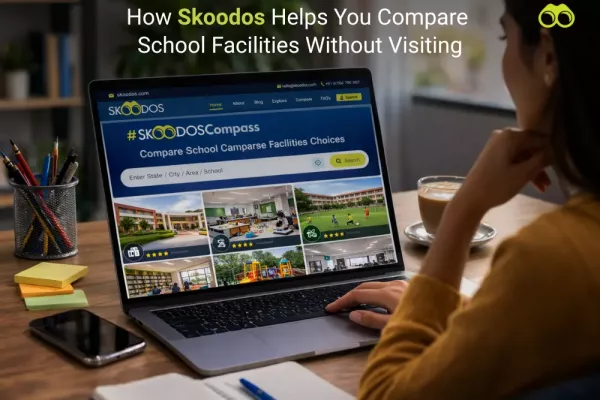
If you’ve ever tried shortlisting schools the traditional way, you already know how messy it gets.On...

If you’ve been through the school admission process recently, you’ve probably noticed something that...
If you’ve reached the school interview stage, you’ve probably already done a lot,forms, research, vi...
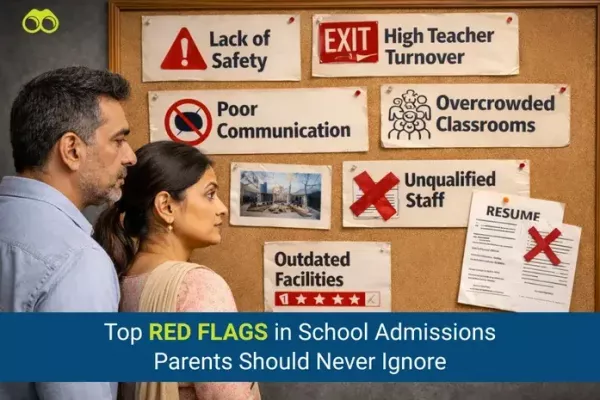
Choosing a school is one of those decisions that doesn’t feel urgent,until it suddenly is. Forms ope...

Choosing a school is one of the most important decisions parents make. Fees, infrastructure, and sch...

Choosing the right school is one of the most important decisions parents make for their children. Ac...


 +91 8766 790 362