

Category: Skoodos
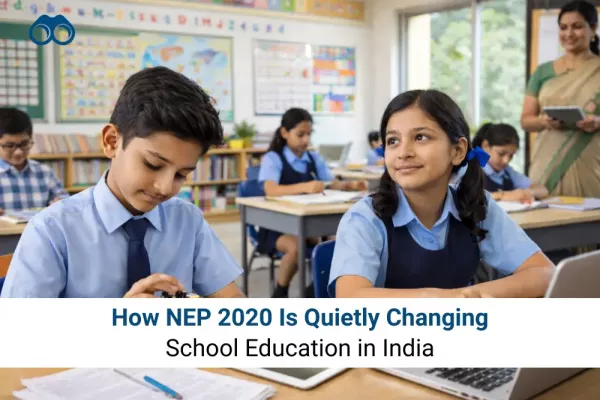
If you’re a parent in India today, you’ve probably heard about NEP 2020, but you may still be wondering:
The NEP 2020 impact on school education is not loud or dramatic, but it is deep and long-term. From how children learn in primary school to how they are assessed in Class 10 and 12, the National Education Policy school changes are reshaping classrooms across CBSE, ICSE, and state boards.
In this guide, we’ll explain the NEP school education reforms in India in simple terms, help you understand what it means for your child, and show how schools are implementing NEP guidelines across urban and rural India.
The National Education Policy 2020 is India’s first major education reform in over three decades. Approved in 2020, it aims to transform school education into a more flexible, skill-based, and future-ready system.
Its key goals include:
This marks one of the biggest phases of School Education Transformation in India.
One of the most important NEP school education reforms, explained simply, is the change in structure.
10+2 (Primary → Secondary → Senior Secondary)
5 + 3 + 3 + 4
Focus on play-based and activity-based learning
This is a major shift under the New Education Policy School Curriculum.
Parents of young children will see the biggest changes here.
The government launched the NIPUN Bharat Mission to ensure all children can read and do basic math by Class 3.
The focus now is:
This directly addresses the impact of NEP on primary and secondary education by building strong basics.
Under NEP, effects on teaching and learning methods in schools, teachers are encouraged to:
This is part of the broader holistic education framework in India.
One of the most searched questions is:
Under the new NEP assessment and evaluation changes, schools are shifting toward:
Board exams will eventually test core concepts and real understanding rather than textbook repetition.
This reform supports learning outcomes-focused education across boards.
The Central Board of Secondary Education has already:
Implementation varies by state, but most state boards are:
This shows growing NEP implementation in Indian schools, both urban and rural.
Students are no longer restricted to rigid streams.
Under NEP multidisciplinary education schools:
This flexibility is a big part of the NEP vision for future-ready education.
Parents often ask:
Here’s what you may already be seeing in your child’s school:
Many schools are also adopting:
Private schools in metro cities like Delhi, Mumbai, and Bengaluru may implement faster, but NEP's impact on rural and urban schools in India is steadily expanding.
The benefits of NEP for school students include:
This explains how NEP improves learning outcomes over time.
No reform is without hurdles.
Common challenges include:
That’s why teacher training programs for NEP implementation and NEP school consultancy services are becoming increasingly important.
If you are comparing schools, here are practical steps:
This helps you identify NEP-compliant school curriculum solutions.
Short answer: Implementation is gradual.
So yes , NEP implementation in Indian schools is underway, but full transformation will take time.
Students benefit from:
Teachers must:
The New Education Policy School Curriculum promotes:
It is quietly shifting schools from memorisation to application, from rigid streams to flexibility, and from exam-focused systems to holistic development.
All boards are expected to align gradually. CBSE schools are already following many NEP reforms, while state boards are adapting in phases.
The NEP 2020 impact on school education is not about an overnight change. It’s about building a system where children:
As a parent, your role is not just to look at board results anymore. It’s to ask:
Is this school future-ready?
When comparing schools, whether CBSE, ICSE, or state board, look at how seriously they are implementing NEP guidelines.
Platforms like Skoodos can help you compare schools based on board affiliation, curriculum approach, fees, facilities, and parent reviews, making your decision easier and more informed.
Because choosing the right school today means preparing your child for tomorrow.





 Blog: Recently Added
Let me say this the way most parents feel it—but don’t always say out loud.mSchool visits are confus...

Let’s be real for a second. Most of us don’t start school admissions with a spreadsheet. We start wi...

If you’re looking for a school right now, you probably didn’t expect it to feel this complicated. At...

If you’ve started looking at school admissions recently, you’ve probably come across terms like ...
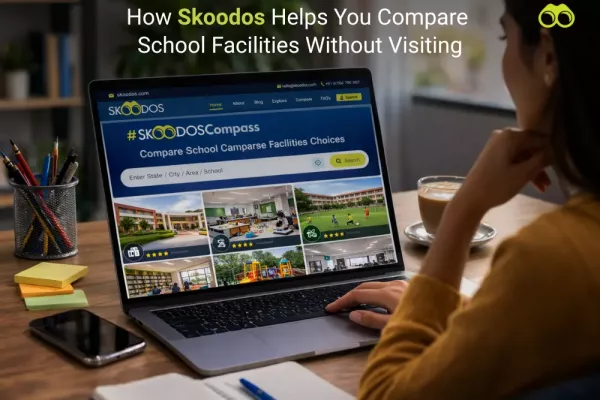
If you’ve ever tried shortlisting schools the traditional way, you already know how messy it gets.On...

If you’ve been through the school admission process recently, you’ve probably noticed something that...
If you’ve reached the school interview stage, you’ve probably already done a lot,forms, research, vi...

Choosing a school is one of those decisions that doesn’t feel urgent,until it suddenly is. Forms ope...

Choosing a school is one of the most important decisions parents make. Fees, infrastructure, and sch...

Choosing the right school is one of the most important decisions parents make for their children. Ac...


 +91 8766 790 362