Category: Skoodos

For parents in India, school admission is perhaps among the most stressful decisions to be made during their child’s early years. This is due to the limited availability of school seats and the diverse admission criteria and fee structures that exist in schools. This leads to an ever-present question that pops up in every parent forum and school admission discussion: How transparent is the school admission process in India?
From the form to the interview, to the lottery, the whole process can be shrouded in mystery. Parents are left wondering if the admission is based on merit, availability, neighbourhood, or something else altogether. The disconnect between what is expected and what is known is precisely the reason why the discussion on School Admission Transparency in India has gained momentum over the last decade.
On the other hand, digital media are helping to bridge the information gap. Take the case of Skoodos, which allows parents to compare schools based on factors such as board, fee, facilities, and admission criteria.
In this blog, an honest look is taken from the viewpoint of a parent on how transparency is defined, what concerns there may be, what the rules and regulations are, and how one can find a school that practices transparency in admissions.
Transparency within school admissions means parents have full awareness of:
The selection process may be merit-based, lottery, or interview-based.
In simple terms, it provides an answer to two questions that parents often ask:
Thus, when this information is not available or is lacking consistency, parents have a sense of mistrust and insecurity, which translates into the notion of a lack of fairness in the admission policies of private educational institutions.
In our interaction with parents, in metro as well as non-metro cities, certain concerns have been repeatedly expressed, which are a reflection of the real lives of Indian parents.
One of the things parents struggle to understand is:
Some schools use proximity as a factor, while others use a quota for siblings. Interactions or merit tests might also be used. In very few cases is the policy fully articulated, which contributes to the perception of gatekeeping.
While tuition fee information is typically publicly available, parents have complained about ambiguity with regard to:
"Optional" activities that become mandatory at a future date. This impacts budgetary planning, particularly in metro cities such as Mumbai, Bengaluru, and Delhi NCR, where the costs are substantially higher.
As the applications are processed, the parents wait for weeks without receiving feedback. Many do not receive information regarding the reasons why their child was not accepted. This is in sharp contrast to countries such as Singapore and Australia, which follow a communication cycle.
The process of documentation for school admission varies; it may include:
Sometimes, the schools demand more information than the guidelines require, which also raises ethical issues.
While student interaction is still common, parent interviews continue to raise questions about fairness. Some argue they indirectly screen for income or social background, contradicting merit-based school admissions.
It is worth mentioning that the regulatory scenario is also becoming better. Government agencies and education boards have introduced regulations to improve Education Transparency India, especially in metropolitan cities.
Key examples include:
Despite these efforts, implementation varies from state to state, as do implementations in different types of schools, such as private unaided, private aided, and international schools.
This creates school selection challenges for parents and increases parental concerns about school admissions regarding fair admission criteria in schools.
The experiences of parents also vary significantly depending on their geographical location, contributing to school selection challenges for parents and concerns around the transparent school admission process.
These systems aim to improve fair admission criteria in schools, but parents still question admission transparency policies.
This often raises parental concerns about school admissions and issues related to private school admission practices.
This highlights gaps in merit-based school admissions and school admission ethics and accountability.
CBSE and state board schools dominate Tier 2 & Tier 3 cities, where admissions are relatively easier, but admission transparency policies and parent trust in school admissions remain weaker.
“Parents rely more on local reputation than published criteria,” reflecting ongoing concerns about the rights of parents and students in the school admission documentation process.
Through information obtained from interviews with parents and education consultants, it was established that transparent schools generally have:
✔ Clear criteria for eligibility and age (supporting fair admission criteria in schools)
✔ Public admission timeline and deadlines (aligned with school admission rules and guidelines)
✔ Fee disclosure with an itemised breakdown (key to admission transparency policies)
✔ Defined selection criteria (lottery/merit/priority) reflecting merit-based school admissions
✔ Open communication channels for queries, strengthening parent trust in school admissions
✔ Compliance with State/National Regulations, ensuring school admission compliance norms
✔ Respect for parent and student rights, reinforcing the rights of parents and students
Parents reported higher satisfaction levels when information was shared proactively, highlighting the importance of Education Transparency India and transparent school admission process practices.
The following checklist has been found useful by India-based parents while navigating school selection challenges for parents:
This helps parents understand the school admission documentation process and private school admission practices.
Clear fee policies reflect school admission ethics and accountability, and reduce parent concerns about school admissions.
Transparent communication improves parents' perspectives on school admission transparency.
These policies support admission transparency policies and school admission rules and guidelines.
Simplified documentation supports the rights of parents and students and improves admission transparency policies.
Platforms like Skoodos make it easier for parents to compare the school admission process explained for parents in India, reducing the need to contact multiple schools individually and helping families identify institutions with fair admission criteria in schools and transparent school admission process frameworks.
Many parents are unaware of their rights during the school admission process, which include:
Understanding these rights can transform the admission experience from passive acceptance to informed decision-making, strengthening parents' trust in school admissions.
Earlier, school admission information was shared mainly through:
Today, digital platforms are reshaping Education Transparency India by bridging information gaps and addressing school selection challenges for parents.
These platforms provide:
Tools like Skoodos further assist parents by offering school admission consultancy services, especially useful for working parents relocating between cities and seeking transparent school admission process options.
Parents can take the following steps to ensure a transparent school admission process and reduce parent concerns about school admissions:
Metro schools open admissions 6 to 10 months before the academic year, so early planning is important.
Compare schools based on:
Check official websites to confirm eligibility and selection criteria. This supports merit-based school admissions.
Confirm compliance with:
Campus visits provide insights beyond brochures and help evaluate private school admission practices.
Ask about transport, extra charges, and teaching philosophy to improve parent trust in school admissions.
Seats are limited, so applying to multiple schools is recommended, especially in school admission transparency India contexts.
Platforms like Skoodos help compare schools and simplify the school admission documentation process and school admission consultancy services.
Yes, but unevenly. Urban and premium schools are adopting better admission transparency policies, while mid-range schools still have limited visibility. Parents are demanding accountability and improving Education Transparency India.
1. What is the process of admissions in Indian schools?
The general process followed by most schools involves eligibility checks, the submission of forms, verification of documents, interactions/lotteries, and then admission with fee payment.
2. Is the admissions system in Indian schools transparent?
There is great variation in transparency from school to school. Some schools make their criteria public knowledge, while others do not reveal their processes
3. What documents are needed to gain admission to a school?
Documents required are generally the birth certificate, proof of address, medical records, photographs, Aadhaar card, and transfer certificate for higher grades.
4. How can parents prevent admission fraud in school?
Verify approvals, no shortcuts, officially track fee payments, and only rely on authorised platforms, not brokers.
5. What are the rights of parents in school admissions?
Parents have the right to understand the fee structure, admission norms, compliance standards, and the grievance system.
6. How to choose a school with a fair admission process?
Be on the lookout for transparent communication methods, itemised fees, compliance with RTE requirements, and well-documented criteria.
Improvement of School Admission Transparency in India is a requirement, which also impacts the reputation of the schools, the trust of the parents, as well as the well-being of the children. It makes the entire process less stressful, as the people involved know the criteria they need.
For parents today, information is power. Websites like Skoodos can make the journey easier for parents as they can compare the schools, verify the admission norms, make contact with the school, and so on.
If you are planning for admissions, it can be helpful to explore and compare your choices ahead of time.



 Blog: Recently Added
Let me say this the way most parents feel it—but don’t always say out loud.mSchool visits are confus...

Let’s be real for a second. Most of us don’t start school admissions with a spreadsheet. We start wi...

If you’re looking for a school right now, you probably didn’t expect it to feel this complicated. At...

If you’ve started looking at school admissions recently, you’ve probably come across terms like ...
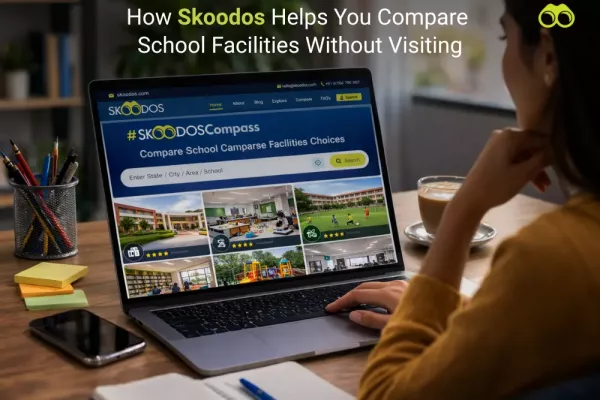
If you’ve ever tried shortlisting schools the traditional way, you already know how messy it gets.On...

If you’ve been through the school admission process recently, you’ve probably noticed something that...
If you’ve reached the school interview stage, you’ve probably already done a lot,forms, research, vi...

Choosing a school is one of those decisions that doesn’t feel urgent,until it suddenly is. Forms ope...

Choosing a school is one of the most important decisions parents make. Fees, infrastructure, and sch...

Choosing the right school is one of the most important decisions parents make for their children. Ac...


 +91 8766 790 362